
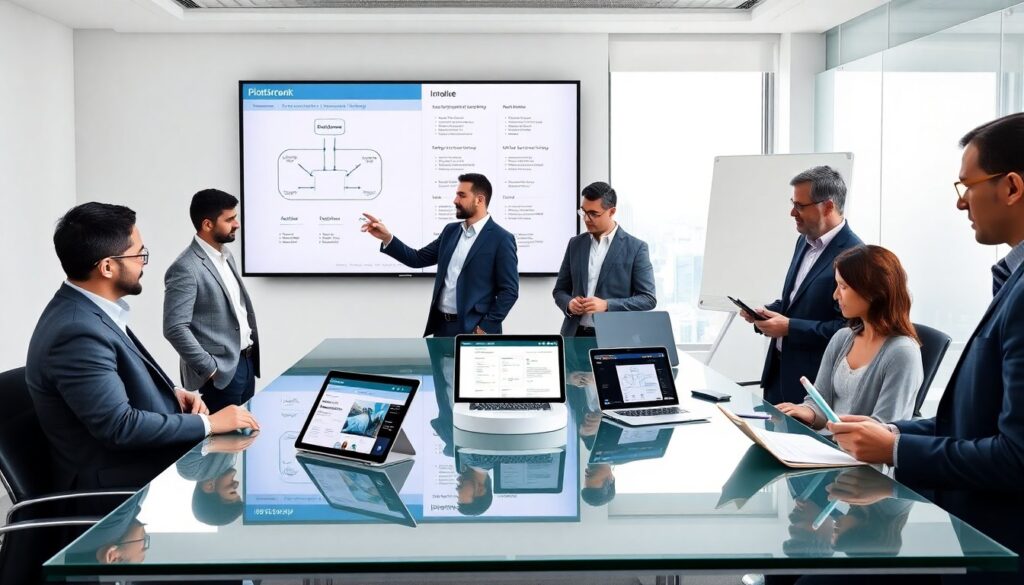
multi screen scalability tech plootskroenk helps teams scale interfaces across phones, tablets, TVs, and kiosks. The guide lists clear principles and steps. It explains architecture, patterns, sync, testing, and migration. The reader will learn concrete practices they can apply in 2026 projects. The writing stays direct and actionable.
Key Takeaways
- Multi screen scalability tech plootskroenk enables teams to deliver consistent user experiences across phones, tablets, TVs, and kiosks by using shared UI rules and adaptive resources.
- The architecture of plootskroenk separates presentation, state, and transport with device-agnostic components, ensuring maintainability and compatibility through versioned contracts.
- Implementing plootskroenk requires component catalogs, automated prop contract checks, feature flags, and real-device QA to reduce errors and accelerate release cycles.
- Frontend practices include adaptive components, centralized styling tokens, snapshot testing, and lazy loading to maintain consistent and efficient multi-screen UX.
- Backend strategies focus on compact manifests, real-time sync with event streams, conflict resolution, and secure, optimized data transport to keep interfaces responsive.
- Testing and migration should involve representative devices, canary deployments, telemetry, rollback plans, and ongoing audits to minimize risks and improve multi screen scalability tech plootskroenk performance.
Why Multi‑Screen Scalability Matters Now
Companies face more device types and form factors in 2026. They must deliver consistent experiences across screens to protect brand and reduce support cost. Plootskroenk focuses on shared UI rules and adaptive resources. Teams using multi screen scalability tech plootskroenk reduce duplicate work and speed releases. Designers keep one source of truth for layout, spacing, and motion. Engineers reuse components and share validation logic. Product teams measure key metrics across surfaces and prioritize fixes that affect the most users. Investors favor products that scale interfaces without large engineering overhead.
Core Architecture Principles Of Plootskroenk
Plootskroenk uses a small set of clear architectural rules. It separates presentation, state, and transport. It defines device-agnostic components that accept layout hints. It uses a lightweight layout engine to map hints to native views. It stores canonical state in a central store and streams deltas to clients. It uses a versioned contract for component props so clients stay compatible. It favors event-driven updates over full payload sync. It compresses and signs bundles for secure delivery. These rules make multi screen scalability tech plootskroenk predictable and easier to maintain.
Implementing Plootskroenk: Key Patterns And Workflows
Teams should adopt patterns that match Plootskroenk principles. They should create a component catalog that defines props, breakpoints, and accessibility rules. They should build a build pipeline that outputs device bundles and a metadata manifest. They should run automated compatibility checks that validate prop contracts before deployment. They should use feature flags to roll new layouts to specific device classes. They should document migration paths for older clients. They should train QA to use real devices and emulators. These workflows shorten release cycles and lower runtime errors for multi screen scalability tech plootskroenk.
Frontend Patterns For Consistent Multi‑Screen UX
Frontend teams should carry out adaptive components that read layout hints and render native controls. They should provide fallbacks when a control is missing on a device. They should keep styles small and composable and centralize spacing tokens. They should use snapshot tests for visual regressions across breakpoints. They should wire analytics to component-level events to detect UX drift. They should prefer content-first rendering so core data appears before chrome. They should use lazy loading for large assets to save memory on constrained devices. These steps make multi screen scalability tech plootskroenk deliver consistent user outcomes.
Backend And Real‑Time Sync Strategies
Backends should serve compact manifests and device-optimized bundles. They should publish state changes as small, immutable events. They should offer a pull model for periodic sync and a push model for real-time needs. They should carry out conflict resolution rules that favor last-writer-then-merge for most UI state. They should use a gateway that adapts transport for each device class and applies rate limits. They should expose health endpoints and telemetry for sync lag. They should encrypt payloads and authenticate clients with short-lived tokens. These strategies keep multi screen scalability tech plootskroenk responsive and secure.
Testing, Migration, And Ongoing Optimization
Teams should test on representative devices and network profiles. They should run scriptable end-to-end tests that exercise core flows across screens. They should include load tests for high-concurrency scenarios. They should stage migrations with a canary group and monitor error and performance signals. They should keep a rollback plan with previous manifests ready. They should collect user feedback via in-app prompts and telemetry. They should schedule periodic audits to prune unused components and update contracts. These steps lower risk when teams adopt multi screen scalability tech plootskroenk.
Performance Benchmarks, Migration Checklist, And Monitoring Tips
Measure cold-start time, bundle size, time-to-first-interaction, and sync latency. Track memory use and frame drops on each device class. Use a migration checklist that includes contract versioning, feature flag coverage, compatibility tests, and a rollback plan. Use monitoring that alerts on sync lag, error spikes, and device-class regressions. Use sampling to capture failed device manifests. Use synthetic tests to detect performance regressions before release. Keep dashboards that show metrics per device and per region. These actions help teams keep multi screen scalability tech plootskroenk fast and reliable.