
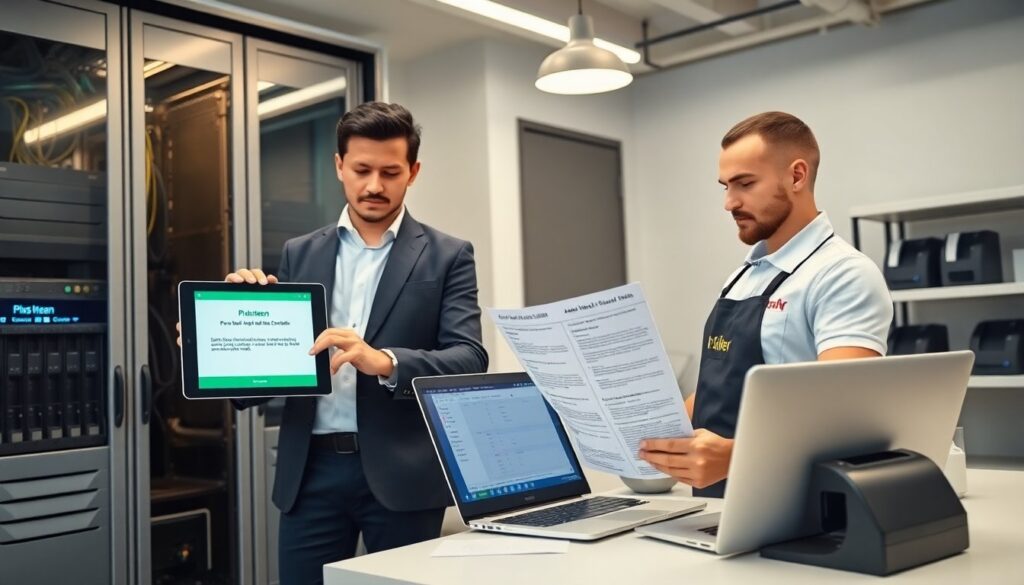
pizza software installation guide pluskreen presents clear steps for busy pizzerias. The guide lists system needs, download steps, Windows install steps, and core setup. The guide helps staff avoid downtime. The guide gives testing tips and quick fixes. The reader will follow short tasks and confirm each step before moving on.
Key Takeaways
- The PlusKreen pizza software installation guide ensures busy pizzerias minimize downtime by following clear, step-by-step setup instructions.
- System requirements include Windows 10 Pro or Windows Server 2019, at least 8 GB RAM, 50 GB free disk space, and a reliable wired network connection for POS terminals.
- Download the correct PlusKreen installer from the official portal, verifying the installer checksum to ensure file integrity and security.
- Run the PlusKreen installer as administrator, provide SQL server details, and complete the installation with possible server reboot as prompted.
- Configure PlusKreen by setting business hours, menu, user roles, tax rates, and payment gateways, then verify order flow with test transactions.
- Schedule daily backups and test restore processes, while securely documenting admin credentials to maintain your pizza software’s reliability and security.
System Requirements And Pre-Install Checklist
PlusKreen pizza software installation guide pluskreen requires specific hardware and network settings. The IT lead checks CPU, RAM, disk space, and Windows version. The app needs Windows 10 Pro or Windows Server 2019 and later. The IT lead ensures at least 8 GB RAM and 50 GB free disk space. The network needs a wired connection for POS terminals. The IT lead confirms a static IP on the server and DHCP for mobile devices when used.
PlusKreen needs .NET 6 runtime and a supported SQL Server instance. The IT lead installs SQL Server Express or uses an existing SQL Server. The IT lead backs up current POS data before install. The manager verifies backup integrity and notes current printer models. The manager creates an admin account and records strong credentials. The manager disables third-party antivirus only for the install and re-enables it with allowed exceptions for PlusKreen files.
How To Download The Correct PlusKreen Installer
The manager visits the official PlusKreen download portal. The manager selects the release that matches the server OS and the POS client OS. The manager confirms the installer version number against the product release notes. The download page lists full installers and update packages. The manager chooses the full installer for new setups and the update package for existing installs.
The IT lead verifies the installer checksum after download. The IT lead runs a hash utility and compares the checksum to the value on the download page. The IT lead moves the installer to the server and restricts file permissions. The manager keeps the installer copy for offline recovery. The manager reads the release notes for breaking changes and known issues.
Installing PlusKreen On Windows
The IT lead runs the PlusKreen installer as administrator. The installer extracts files and checks pre-requisites. The installer prompts for SQL connection, install path, and service account. The IT lead supplies the SQL Server address and admin credentials. The installer creates the PlusKreen service and database schema. The install completes within 5–15 minutes on modern hardware. The IT lead restarts the server if the installer requests a reboot.
Configuring PlusKreen For Your Restaurant
The restaurant manager opens the PlusKreen admin console. The manager sets business hours, menu items, modifiers, and pricing. The manager maps terminals to locations and sets user roles and permissions. The manager configures tax rates and delivery zones. The manager imports staff and vendor lists from CSV when available. The manager verifies payment gateway credentials and enables test mode for initial checkout tests.
The manager runs sample orders to confirm order flow. The manager checks reports for correct sales categories. The manager schedules daily backups and tests restore once. The manager documents the admin credentials and stores them in a secure password manager.