
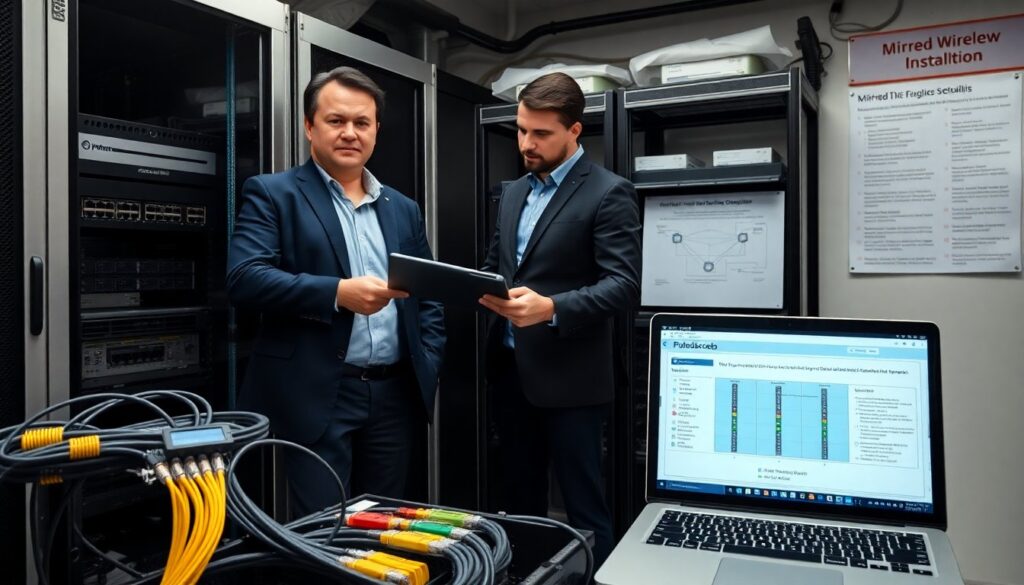
mirrored wireless firewall installation plutoscrneb helps teams copy wireless traffic to a secondary device for inspection and failover. The guide explains the install steps, core settings, and verification checks. It states clear prerequisites and safety actions. It keeps commands and choices simple. It aims to let network teams deploy PlutoScrneb quickly and with predictable outcomes.
Key Takeaways
- A mirrored wireless firewall installation plutoscrneb copies wireless traffic to a secondary firewall for inspection and failover without disrupting live operations.
- Planning a PlutoScrneb deployment requires compatible hardware, IP addressing, backups, and scheduling maintenance to ensure smooth installation.
- Install PlutoScrneb by setting up management and mirrored NICs, applying the firewall image, configuring logging, and validating traffic flow.
- Post-install testing should verify packet capture, monitor system performance, and troubleshoot any packet loss or configuration issues.
- Regular maintenance includes firmware updates, credential rotation, log management, compliance masking, and failover drills to maintain security and reliability.
What Is A Mirrored Wireless Firewall And Why Use It
A mirrored wireless firewall installation plutoscrneb creates a copy of wireless traffic and sends that copy to a firewall instance. Teams use mirroring to inspect packets, detect threats, and maintain availability. It gives operators visibility without interrupting live traffic. It reduces blind spots from encrypted or client-to-client traffic. It supports incident response and forensics. It supports high-availability setups by allowing a secondary firewall to take over when the primary fails. It suits campuses, retail sites, and branch offices that require both inspection and uptime.
Planning And Requirements For PlutoScrneb Deployment
PlutoScrneb requires compatible wireless access points, switches with mirror port or SPAN support, and a firewall image for the mirrored instance. Confirm switch CPU and port capacity. Reserve at least two NICs for mirrored traffic and management on the PlutoScrneb node. Plan IP addressing and NAT ranges. Prepare power and rack space. Schedule a maintenance window and notify users. Verify firmware compatibility between APs and switches. Test cable paths and label them. Create backup of current configs before you run the mirrored wireless firewall installation plutoscrneb steps.
Installing And Configuring The Mirrored Wireless Firewall
Install PlutoScrneb on the chosen server or virtual host. Attach the management NIC and the mirrored NICs. Load the provided firewall image and apply the license key. Set the base management IP and default route. Update the firewall firmware and apply the security patch bundle. Enable packet capture on the mirror NIC and set buffer sizes per vendor guidance. Configure logging to an external syslog to avoid disk exhaustion. Apply basic firewall policies to allow probe and logging traffic. After installation, run a basic traffic flow test to confirm the mirrored wireless firewall installation plutoscrneb functions.
Testing, Monitoring, And Troubleshooting Post-Install
Run functional tests that include authentication, DHCP renewals, and large file transfers. Verify the mirrored wireless firewall installation plutoscrneb shows expected packets in capture. Monitor CPU, NIC drops, and buffer levels for 24 hours. Check logs for repeated drops or policy blocks. If packets do not appear, confirm SPAN destination settings and check port VLAN tagging. If the firewall drops packets, scale back deep inspection rules or add CPU resources. Use packet samples to confirm proper NAT translation. Document each test and its result for future audits.
Best Practices For Maintenance, Security, And Compliance
Apply regular firmware and signature updates to PlutoScrneb. Rotate credentials and enable role-based access. Keep a rolling backup of config and exports of packet captures for incidents. Retain logs per policy and send them to a secure SIEM. Limit mirror scope to reduce exposure of sensitive data. Mask or redact fields in logs when required by compliance. Run quarterly failover drills and validate state sync. Review and prune wireless policies to remove obsolete rules. Maintain an incident playbook that references the mirrored wireless firewall installation plutoscrneb steps and recovery actions.