
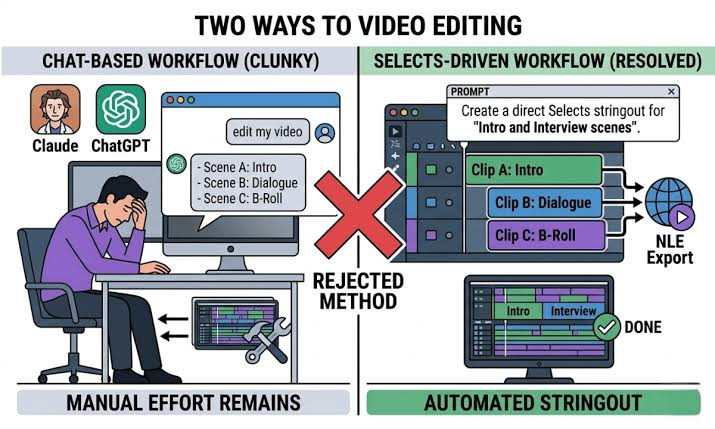
Video creation was once defined by rigid boundaries. Scriptwriters sat in isolated text editors, conceptualizing narratives line by line, while video editors worked downstream, sifting through hours of raw footage to assemble scenes frame by frame. Converting a written idea into a finished visual required constant back-and-forth communication, manual asset matching, and significant technical expertise across multiple software suites.
The integration of Large Language Models (LLMs) and artificial intelligence directly into multimedia software has dismantled those boundaries. Text and video processing are no longer separate stages; they now exist within a unified interactive workflow. Today’s content creators leverage natural language prompts to script, generate, organize, and edit video content dynamically.
The Shift from Manual Editing to Conversational Creation
Historically, non-linear editing (NLE) platforms focused strictly on visual and audio manipulation: timeline trimming, keyframing, color grading, and audio mixing. Creative direction and narrative writing were handled entirely outside the editing environment.
With conversational AI, text generation and timeline creation happen concurrently. Instead of manually cutting clips, drafting subtitles, and sourcing matching stock visuals, creators can instruct intelligent assistants to perform these tasks via plain text.
Modern intelligent creation tools handle multi-step workflows seamlessly:
- Script Generation and Refinement: Generating full scripts, short hooks, or voiceover outlines from high-level concepts.
- Automatic Storyboarding: Mapping script lines directly to visual themes, suggested B-roll, and specific scene durations.
- Text-Based Timeline Editing: Trimming or re-ordering video clips by simply modifying the text transcript.
- Automated Asset Generation: Synthesizing voiceovers, multi-language captions, and visual elements automatically.
By leveraging a flexible AI art generator integration, creators can bridge the gap between creative ideation and timeline execution within a single unified suite.
Key Technical Innovations Powering AI Video Tools
The shift toward AI-assisted editing relies on several underlying technologies working in tandem:
1. Large Language Models (LLMs)
LLMs analyze contextual relationships within written language. When applied to video editing, they parse scripts, recognize key themes, identify natural pause points, and suggest appropriate visual pacing based on narrative context.
2. Natural Language Processing (NLP) & Speech-to-Text
Speech recognition models convert spoken audio into precise, timestamped transcripts. This allows editors to edit video by editing text: deleting a word or sentence in the transcript automatically cuts the corresponding footage from the timeline.
3. Generative AI for Visuals and Audio
Multimodal models generate contextual graphics, synthetic voiceovers, and dynamic B-roll clips based directly on script prompts, drastically reducing the time needed to source external assets.
Modern Workflow Comparison
|
Workflow Stage |
Traditional Editing |
AI-Assisted Editing |
|
Scriptwriting |
Manual drafting in external word processors |
Prompt-driven drafting, auto-formatting, and tone adjustment |
|
B-Roll Selection |
Manual stock searching and tagging |
Automatic visual suggestions based on script context |
|
Rough Assembly |
Manual dragging, trimming, and arranging clips |
Automatic assembly based on text transcripts |
|
Subtitles & Captions |
Manual typing or basic auto-transcription requiring heavy cleanup |
High-accuracy automated captioning with dynamic styling |
|
Localization |
Re-recording voiceovers and manually re-translating text |
One-click synthetic voice translation and caption translation |
Practical Applications Across Content Verticals
The speed and flexibility offered by integrated AI editing tools benefit a wide variety of digital content producers:
Digital Marketing & Social Media
Marketers must produce diverse ad variations for multiple platforms (TikTok, Instagram Reels, YouTube Shorts). AI workflows allow rapid re-formatting of single scripts into varied aspect ratios, hooks, and localized languages in a fraction of the time.
Educational & Corporate Training
Creating tutorial videos or corporate onboarding modules often requires extensive script coordination and transcript synchronization. AI tools automate captioning, summarize key takeaways into on-screen text overlays, and generate clean synthetic voiceovers for quick updates.
Content Creators & Vloggers
Independent creators managing high upload schedules can offload time-consuming tasks like cutting silent pauses, generating captions, and creating dynamic video trailers from long-form recordings.
Best Practices for Integrating AI into Your Video Production
While AI tools dramatically streamline the creation process, human oversight remains essential for maintaining artistic vision and quality control.
- Refine Prompts for Better Outputs: Give specific instructions regarding tone, target audience, duration, and visual style when generating scripts or storyboards.
- Review Transcripts and Captions: Always perform a quick proofread on auto-generated transcripts, particularly when working with specialized jargon or brand names.
- Maintain Visual Cohesion: Ensure that AI-selected stock clips and generated visuals align with your brand’s aesthetic and pacing goals.
- Iterate Incrementally: Use AI for the initial heavy lifting—such as drafting scripts and generating rough assemblies—and focus your effort on polishing final edits and fine-tuning creative details.
The Future of Text-Driven Video Production
As multimodal AI continues to evolve, the line between text generation and video rendering will become increasingly seamless. Real-time script updates will instantly reflect across timelines, multi-language audio localization will preserve original vocal nuances, and prompt-driven style transfers will allow creators to re-theme videos instantly.
Integrating AI capabilities into creative tools transforms video production from a technical chore into an intuitive, text-driven creative conversation—empowering creators of all skill levels to bring their stories to life efficiently.