
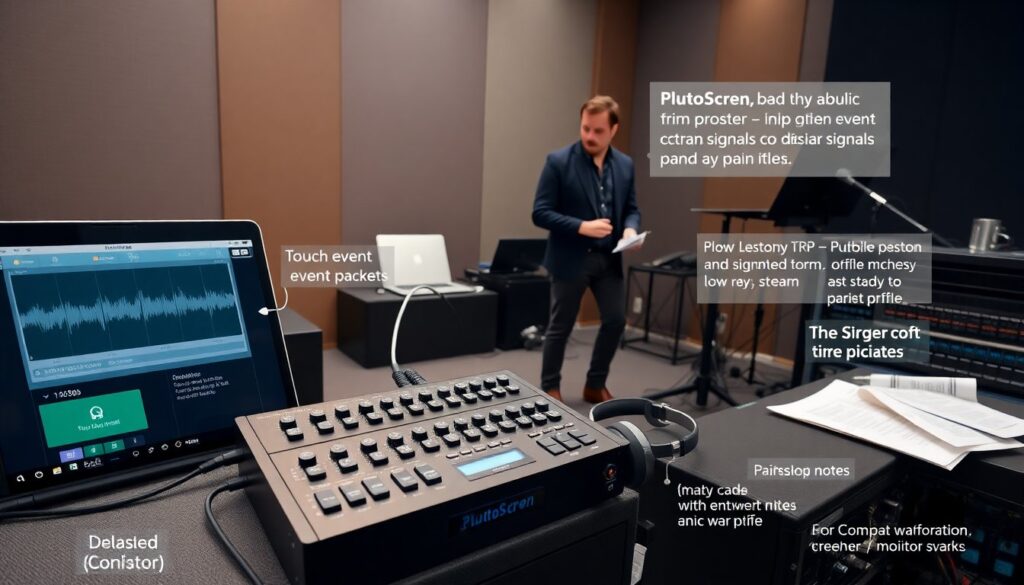
PlutoScren: the digital signature musical instrument plutoscren appears as a new tool for live musicians and producers. It captures player gestures and links them to sound and identity. The device records signature data, signs that data cryptographically, and streams verified musical events. The design keeps latency low and keeps audio quality high. This introduction sets the basic facts and prepares readers for a clear technical and practical tour.
Key Takeaways
- PlutoScren is a digital signature musical instrument that captures player gestures and signs performance data cryptographically to ensure authenticity and low latency.
- The device supports local synthesis, external sound engines, MIDI, OSC, and high-resolution streams, enabling versatile sound design and precise performance control.
- Cryptographic signing with secure hardware keys prevents tampering and allows verification of performances, enhancing trust and reproducibility in live shows.
- PlutoScren integrates smoothly with consoles and laptops via USB-C and Ethernet, offering recommended workflows that include signed backups and key rotation to ensure reliable performances.
- Musicians and producers benefit from PlutoScren by proving authorship, facilitating rights management, and enabling collaborative, verifiable live sets.
What Is PlutoScren? A Brief Overview And Core Concepts
PlutoScren: the digital signature musical instrument plutoscren combines sensors, firmware, software, and cloud services. It captures gesture and tone data from a player. It then creates a signed data packet that ties sound to a unique performer key. The instrument runs local synthesis or controls external sound engines. It supports MIDI, OSC, and native high-resolution streams. The design aims to make performances verifiable and reproducible. It also stores performance metadata for later review. Musicians use the device to prove authorship and to sync multi-device shows.
How PlutoScren’s Digital-Signature Technology Works
PlutoScren: the digital signature musical instrument plutoscren uses cryptographic keys to sign performance events. The device generates a private key on secure hardware. It signs each event packet before sending it. Receiving systems verify the signature with the public key. This process prevents tampering and proves the event source. The system also timestamps packets to keep event order and timing. The signing runs in background code to avoid added latency. The instrument can rotate keys and sync public keys with a cloud directory.
Musical Capabilities And Sound Design Options
PlutoScren includes a modular synth engine, multi-sample playback, and granular processing. It supports sample layering with per-layer pitch, filter, and envelope controls. It offers spatialization modes for stereo and ambisonics. The device accepts external plugins via a hosted container architecture. It also sends high-resolution control streams to DAWs and hardware synths. Sound designers can export signed presets and share them with verified checksums. The instrument supports microtiming edits and expressive mapping for nuanced dynamics.
Performance Setup, Integration, And Workflow Tips
PlutoScren connects to consoles and laptops via USB-C and Ethernet. It exposes MIDI over USB, OSC over UDP, and a signed RTP stream for audio. It can run as a primary instrument or as a controller. The recommended workflow uses local monitoring and a parallel signed backup stream to a recorder. The player should load a signed mapping profile before the set. Sound techs should import public keys into the console verify list. The team should rehearse key rotation and verify steps to avoid last-minute failures.
Practical Use Cases, Creative Ideas, And Best Practices
PlutoScren fits solo performers, touring bands, and streaming studios. It helps artists prove authorship for live improvisation. It helps venues verify performer identity for licensing. It enables collaborative sets where each device signs its contributions. Creative users archive signed takes for later release. Producers use signed stems to speed audits and rights management. Best practice calls for regular firmware updates, secure key storage, and clear session notes. Teams should test verification flows before public shows to ensure smooth operation.