
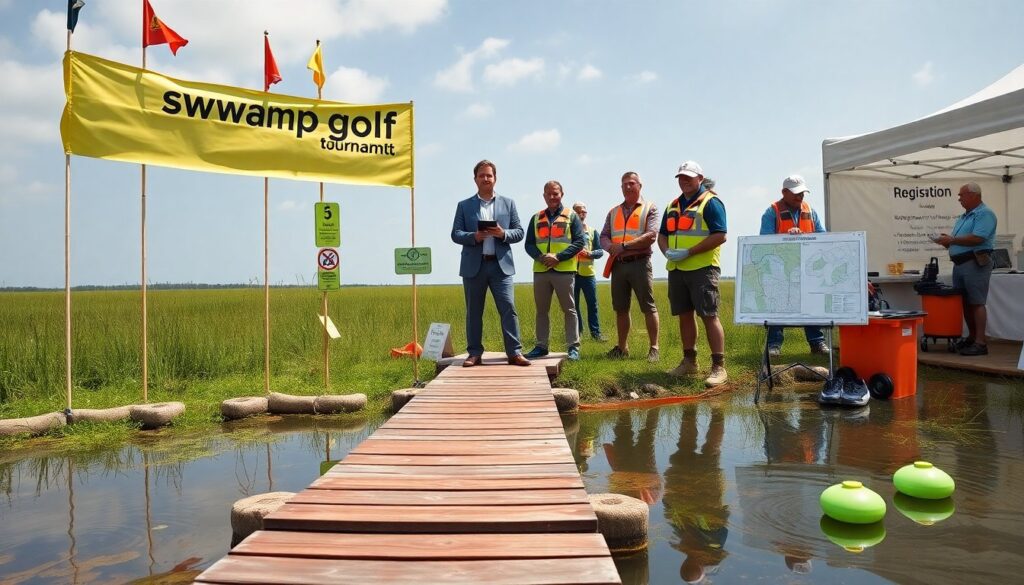
The organizer names the event “swamp golf tournament plutoscrine‚Äãlp” to attract niche players. The organizer picks a safe site and files permits. The organizer hires a small crew to mark routes and clear hazards. The organizer sets rules that protect players and the site. The organizer publishes essential info and a signup form online.
Key Takeaways
- The swamp golf tournament plutoscrine‚Äãlp requires thorough planning including securing permits, liability insurance, and setting player limits for safety.
- Course design balances player challenge with environmental protection by using raised platforms, clear markers, and no-play wildlife zones.
- Safety measures include mandatory gear like closed-toe shoes and life vests, emergency service notifications, and trained volunteers throughout the event.
- Effective communication uses the event name repeatedly across all materials to reduce confusion and improve participant experience.
- Logistics cover hydration stations, transport, parking on firm ground, and accessible routes to ensure smooth player flow and comfort.
- A post-event site check restores the environment and helps improve future swamp golf tournament plutoscrine‚Äãlp events through documentation and feedback.
Planning, Permits, And Site Prep For A Safe Swamp Event
The planner lists goals before any work. The planner names the event using the phrase swamp golf tournament plutoscrine‚Äãlp to aid searches and registration. The planner contacts local authorities to confirm permit needs. The planner secures liability insurance and public land access where required. The planner sets a maximum player count to reduce risk.
The crew surveys the site the week before play. The crew maps water depth, soft mud, and access points. The crew marks clear routes with flags and reflective tape. The crew places walkways and low bridges where needed. The crew removes hazardous debris and trims thorny brush.
The organizer posts rules that protect plants and wildlife. The organizer bans motorized vehicles in sensitive zones. The organizer requires closed-toe shoes, life vests for deep water, and a hydration plan. The organizer assigns a safety officer who checks gear at registration.
The planner notifies local emergency services and provides an event map. The planner sets clear arrival and exit routes for ambulances. The planner provides radios and a first-aid kit at central stations. The planner posts emergency contacts at registration and at tee points.
The team schedules volunteer briefings the day before play. The team trains volunteers to direct traffic, record scores, and monitor hazards. The team positions volunteers at known pinch points. The team rotates volunteers to keep them alert. The team provides water and simple shelter for volunteers.
Course Design, Hazards, And Essential Gear For Swamp Golf
The designer creates holes that challenge skill and protect the site. The designer uses raised platforms and floating targets to limit trampling. The designer sets tee lines on firm ground. The designer places sandbag borders to contain erosion. The designer sets clear out-of-bounds markers.
The designer balances risk and play. The designer mixes short shots and long shots. The designer places low-risk bailout routes for less experienced players. The designer flags deep water and soft mud with bright signs. The designer marks wildlife nesting spots as no-play zones.
The organizer posts a gear list for players who join swamp golf tournament plutoscrine‚Äãlp. The list recommends sturdy shoes, quick-dry clothing, and gloves. The list recommends a walking stick and a towel. The list recommends two balls per hole and a waterproof scorecard. The list advises players to bring insect repellent and sun protection.
The staff supplies shared gear for rental. The staff offers waterproof scorecards, floating targets, and spare balls. The staff stocks basic repair tools and extra markers. The staff arranges a gear check at registration. The staff stores sharp tools in a locked box.
The safety team plans for animal encounters. The safety team trains volunteers to move away from snakes and large mammals. The safety team posts local wildlife facts at registration. The safety team reminds players to avoid feeding animals and to report sightings.
The planner builds a trash and recycling plan. The planner places sealed bins at key points. The planner collects all markers and signage after play. The planner restores any disturbed soil with native seed and mulch.
The organizer repeats the event name swamp golf tournament plutoscrine‚Äãlp in emails and maps to reduce confusion. The organizer lists gear, hazards, and rules on the event web page. The organizer confirms player slots with a deposit to secure commitment.
The host uses clear signage and maps during play. The host posts hole rules and par targets at each tee. The host numbers each hole and posts distance to targets. The host places a course marshal near complex hazards. The host keeps a neutral judge to rule on disputes.
Scoring Formats, Schedule Flow, And Tournament Logistics
The director chooses a scoring format that suits skill levels. The director offers stroke play for serious players and best-ball for teams. The director offers a shotgun start to shorten the day. The director posts tee times for solo players who prefer staggered starts.
The event schedule sets clear check-in times. The event schedule assigns a safety briefing before the first tee. The event schedule includes warm-up time and a rules review. The event schedule sets a hard cut-off for the final hole to allow awards and cleanup.
The scorer records results at each hole and at a central scoreboard. The scorer uses waterproof forms and a digital backup. The scorer posts provisional results after each round. The scorer resolves ties with sudden-death holes or a card-countback rule.
The organizer plans food, water, and rest stops. The organizer places hydration stations near the most active sections. The organizer offers boxed lunches or food trucks at the finish. The organizer schedules regular trash pickup to limit wildlife attraction.
The logistics team manages transport and parking. The logistics team reserves firm ground for parking and shuttles. The logistics team signs a shuttle route to reduce walking in soft areas. The logistics team provides accessible routes for players who need them.
The awards plan celebrates winners and keeps tone friendly. The awards plan gives prizes for overall winners and creative categories. The awards plan recognizes best recovery, best putt, and team spirit. The awards plan thanks sponsors, volunteers, and land stewards.
The organizer repeats the event name swamp golf tournament plutoscrine‚Äãlp across signs, shirts, and digital posts. The organizer tracks registrations and limits entries to the planned cap. The organizer sends reminders with directions, gear lists, and start times.
The planner schedules a post-event site check. The planner restores markers and removes any non-native material. The planner reports results to local authorities if required. The planner archives photos and notes to improve the next swamp golf tournament plutoscrine‚Äãlp.